1. 规则引擎基础
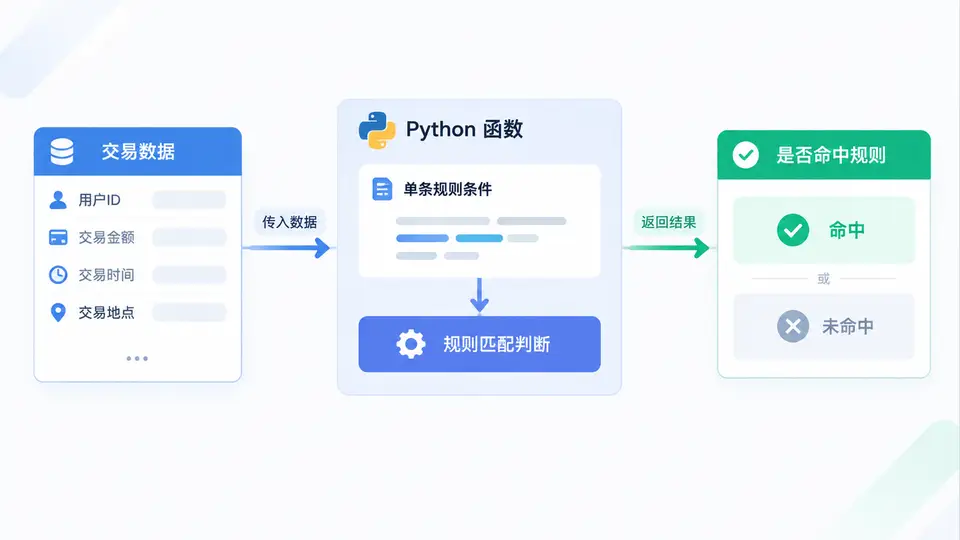
任务目标
实现一个最小可用的规则执行函数:输入一笔交易数据(dict)和一条规则条件(dict),判断该交易是否命中规则,返回布尔值。规则条件支持字段比较(> >= < <= == !=)与逻辑组合(and / or)。
规则结构约定
- 单条件:
{"field": "amount", "op": ">", "value": 1000} - 组合条件:
{"logic": "and", "conditions": [cond1, cond2, ...]},logic取and或or。 - 字段缺失时视为不命中(返回
False),避免抛异常中断批量执行。
完整实现
import operator

# 支持的比较运算符映射
_OPS = {
    ">": operator.gt,
    ">=": operator.ge,
    "<": operator.lt,
    "<=": operator.le,
    "==": operator.eq,
    "!=": operator.ne,
}

def _eval_single(txn, cond):
    """执行单条字段比较条件。"""
    field = cond.get("field")
    op = cond.get("op")
    value = cond.get("value")

    if field not in txn:
        return False
    if op not in _OPS:
        raise ValueError(f"不支持的运算符: {op}")

    return _OPS[op](txn[field], value)

def match_rule(txn, rule):
    """判断交易 txn 是否命中规则 rule,返回 bool。"""
    if "logic" in rule:
        logic = rule["logic"]
        conditions = rule.get("conditions", [])
        if logic == "and":
            return all(match_rule(txn, c) for c in conditions)
        if logic == "or":
            return any(match_rule(txn, c) for c in conditions)
        raise ValueError(f"不支持的逻辑: {logic}")

    return _eval_single(txn, rule)

if __name__ == "__main__":
    txn = {"amount": 1500, "country": "CN", "is_new_device": True}

    rule1 = {"field": "amount", "op": ">", "value": 1000}
    rule2 = {
        "logic": "and",
        "conditions": [
            {"field": "amount", "op": ">=", "value": 1000},
            {"field": "country", "op": "!=", "value": "US"},
        ],
    }
    rule3 = {
        "logic": "or",
        "conditions": [
            {"field": "amount", "op": ">", "value": 5000},
            {"field": "is_new_device", "op": "==", "value": True},
        ],
    }

    print(match_rule(txn, rule1))  # True
    print(match_rule(txn, rule2))  # True
    print(match_rule(txn, rule3))  # True
运行与验证
- 将代码保存为
rule_engine.py,执行python rule_engine.py。 - 预期输出三行
True,与代码中注释一致(由给定输入唯一确定)。 - 可自行修改
txn中amount为500,则rule1应输出False,用于确认比较逻辑生效。 - 若规则中字段名不在交易数据里,函数返回
False而非报错,这是批量风控场景下的容错约定。
关键点说明
组合条件通过递归调用 match_rule 实现,因此 and / or 可以任意嵌套,无需额外代码。运算符用 operator 模块映射,避免写一长串 if/elif,也便于后续扩展。